

- News
- Indian Citizenship Act 1924
Indian Citizenship Act 1924
June 2 is the anniversary of the Indian Citizenship Act.
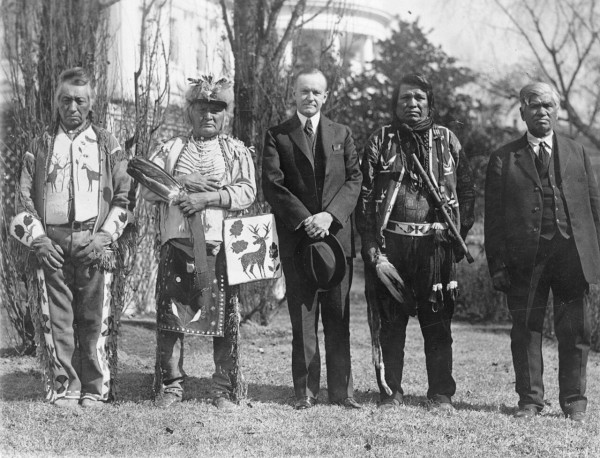
The act was proposed by U.S. Representative Homer P. Snyder (R-NY) and signed into law by President Calvin Coolidge on June 2, 1924.
While the law recognized Native Americans as citizens, it did not guarantee full civil rights. Some states (MT, WY, ND, SD, AZ, NM, UT) continued to block Native Peoples from voting until 1948.
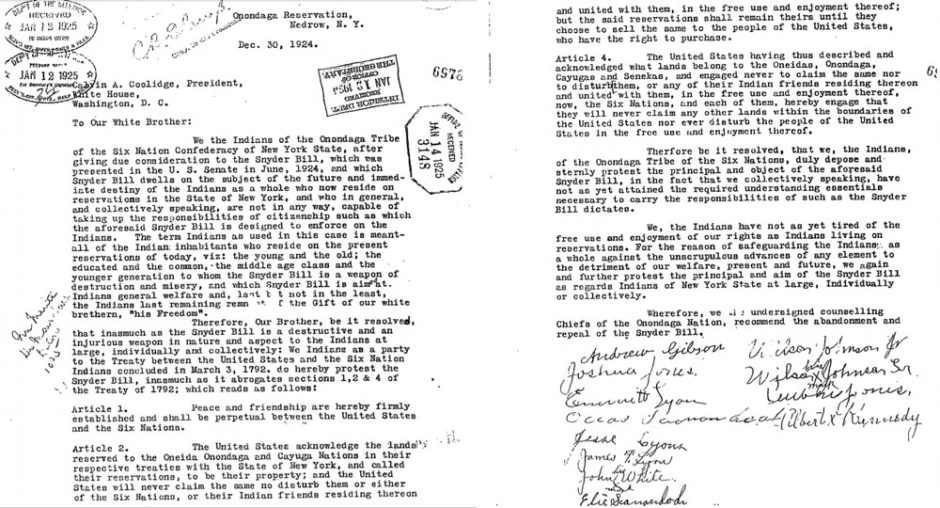
Furthermore, the Act was not embraced by all. “We Indians as a party to the treaty between the United States and the Six Nation Indians concluded in March 3, 1792, do hereby protest the Snyder Bill, inasmuch as it abrogates sections 1, 2 & 4 of the Treaty of 1792,” in a letter dated December 30, 1924, from the Onondaga Nation to President Coolidge.
Registered members of federally recognized tribes are citizens of that tribe, the U.S., and their State. Native Americans serve in the U.S. military at five times the national average. But Nations continue to be buffeted by state and federal actions, and Native Peoples continue to defend their remaining sovereignty and unique trilevel citizenship.
102 years later, Native Nations still face barriers to equal access and representation, making the anniversary a reflection on progress and a reminder of the challenges that remains.